
What Is a Will — and Why It’s No Longer Enough for Modern Estate Planning

Qisheg Wu
When people hear the term “estate planning,” many immediately think about one thing: a will.
But in today’s world, a will is only one piece of a much larger puzzle.
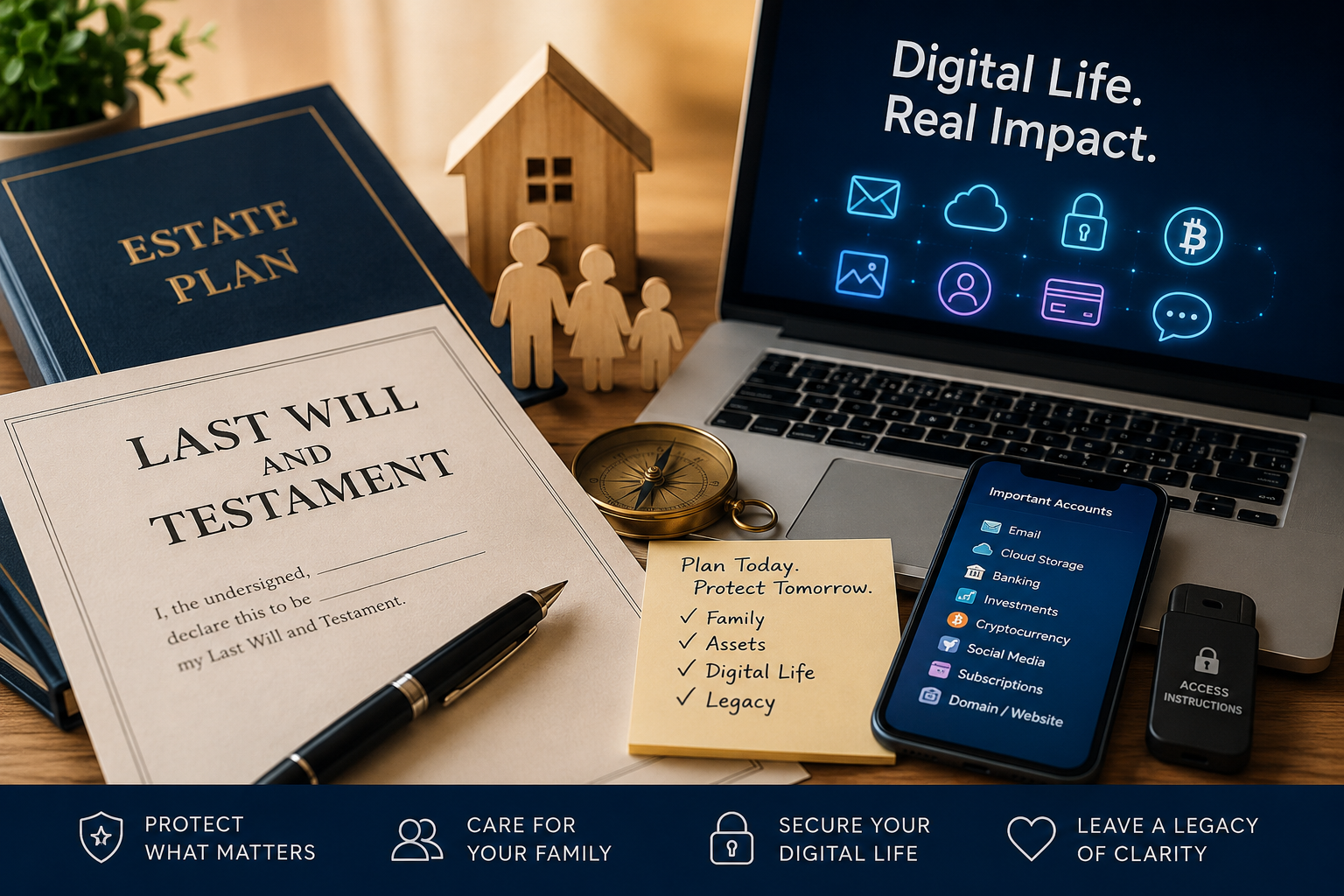
Our financial lives, memories, businesses, and even identities increasingly live online. That changes what happens after we die — and it changes what our families need in order to manage our affairs.
A traditional will can answer who gets what.
A modern estate plan also needs to answer:
- What accounts exist?
- How can loved ones access them?
- What subscriptions, assets, or liabilities continue running?
- What happens to digital assets like crypto, cloud storage, or online businesses?
That’s why estate planning is evolving beyond paper documents into something more operational and digital.
What Is a Will?
A will (or “last will and testament”) is a legal document that describes how your assets should be distributed after your death.
A will typically includes:
- Who inherits your assets
- Who manages your estate (the executor)
- Guardians for minor children
- Instructions for personal belongings
- Charitable donations or special requests
In simple terms, a will is the legal instruction manual for your estate.
Without a will, state law decides how your assets are distributed. This process is called dying intestate, and the outcome may not reflect your actual wishes.
How Does a Will Work?
A will only becomes active after death.
The process usually looks like this:
1. You Create the Will
The document is signed according to state legal requirements, often with witnesses.
2. The Probate Process Begins
After death, the will is submitted to probate court.
Probate is the legal process that:
- validates the will
- appoints the executor
- oversees debt payments
- authorizes asset distribution
3. The Executor Manages the Estate
The executor gathers assets, pays debts and taxes, and distributes remaining property to beneficiaries.
4. The Estate Closes
Once all obligations are completed, the probate process ends.
The Common Misunderstanding About Wills
Many people assume a will avoids court involvement.
In reality, a will often requires probate.
Probate can:
- take months or years
- become expensive
- create family disputes
- expose financial details publicly
That’s why many estate plans include additional tools like trusts, beneficiary designations, and powers of attorney.
A will is important — but it is not a complete estate strategy by itself.
Estate Planning Has Changed in the Digital Era
Historically, estate planning focused on physical and financial assets:
- homes
- bank accounts
- investments
- jewelry
- family heirlooms
Today, people also leave behind:
- email accounts
- cloud storage
- social media
- online businesses
- crypto wallets
- subscription services
- digital photos and videos
- AI tools and SaaS platforms
- domains and websites
And this creates a new problem.
Even if your family legally inherits your assets, they may not know:
- what exists
- where it exists
- how to access it
- what should be canceled, preserved, or transferred
The legal transfer of ownership is no longer enough. Families also need operational access.
Why Digital Estate Planning Matters
Imagine someone passes away leaving behind:
- a Coinbase account
- Google Photos archives
- a Stripe-powered online business
- dozens of subscription services
- important documents in cloud storage
- password-protected devices
A will may legally state:
“Everything goes to my spouse.”
But the spouse may still have no idea:
- which accounts exist
- how to log in
- where passwords are stored
- which bills continue auto-renewing
- how to recover crypto assets
- how to operate the business
In some cases, digital assets become permanently inaccessible.
This is why digital estate planning is becoming one of the most important parts of modern financial planning.
A Modern Estate Plan Includes More Than a Will
Today, a complete estate plan may include:
| Tool | Purpose |
|---|---|
| Will | Legal instructions for asset distribution |
| Trust | Helps avoid probate and manage assets privately |
| Power of Attorney | Allows someone to act on your behalf if incapacitated |
| Healthcare Directive | Medical decision-making instructions |
| Beneficiary Designations | Direct transfer of accounts like retirement plans |
| Digital Asset Plan | Instructions and access for online accounts |
| Password Management Strategy | Secure transfer of account access |
| Operational “Life Manual” | Practical instructions for family |
This last category — the operational guide — is increasingly important.
Families often inherit legal ownership without inheriting the practical knowledge needed to manage someone’s digital life.
The Rise of the “Digital Executor”
Some estate plans now designate a digital executor — someone specifically responsible for handling online accounts and digital assets.
Responsibilities may include:
- managing social media accounts
- recovering important files
- closing subscriptions
- transferring online businesses
- preserving digital memories
- securing financial accounts
This role didn’t exist for most people 20 years ago.
Now, it may become standard.
Practical Steps Most People Can Take Today
You do not need to be ultra-wealthy to benefit from estate planning.
A simple modern setup might include:
- Create a legally valid will
- Name beneficiaries on financial accounts
- Set up healthcare and financial powers of attorney
- Create a digital asset inventory
- Use a password manager
- Document critical accounts and subscriptions
- Tell a trusted person where important information is stored
For people with businesses, real estate, or larger estates, trusts and more advanced planning may also make sense.
Final Thought
A will remains one of the most important legal documents a person can create.
But in the digital age, inheritance is no longer just about transferring ownership.
It’s also about transferring access, knowledge, and continuity.
The future of estate planning is not only legal.
It is operational, digital, and deeply connected to how we live online every day.